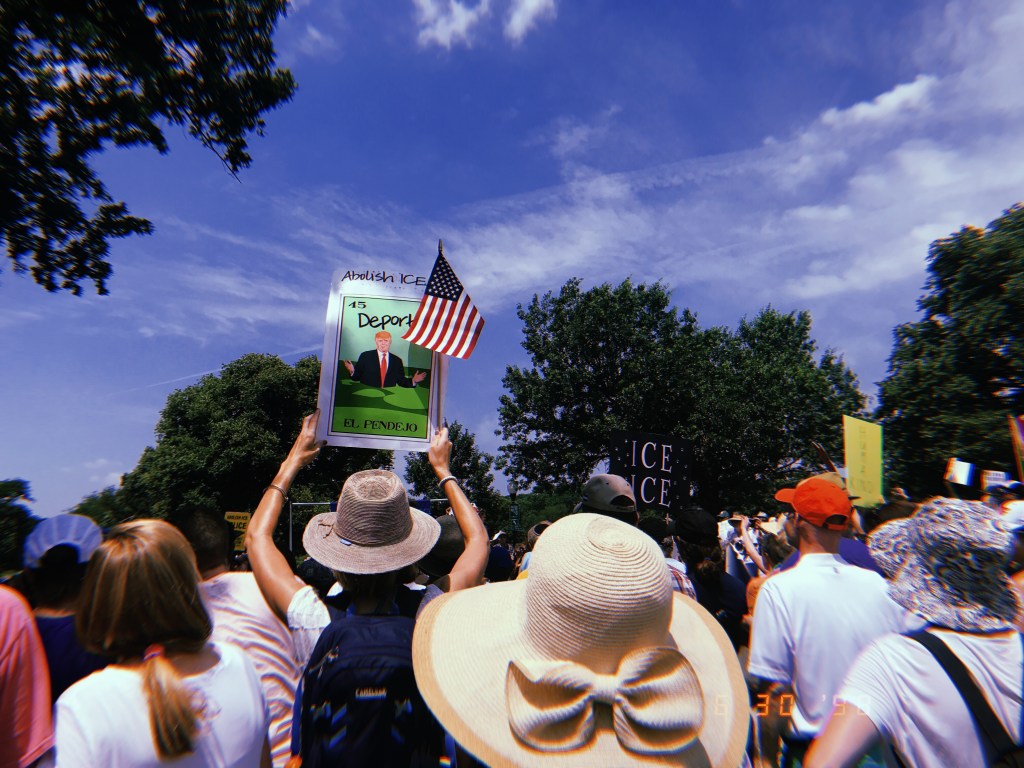
As I neared the southeast corner of Patterson Park last Saturday, June 30, the knot in my stomach had yet to untie itself. After days-long rumination over whether or not I should show up to the Baltimore Families Belong Together rally, I had finally settled on attending. But my qualms persisted.
As I drew closer to the crowd, one thing became glaringly obvious: the sea of white was not merely a result of the organizers’ requested attire— I was in the minority. The range of protesters was narrow, with attendees differing more in age and poster design than in race and ethnicity.
It was for this exact reason that I had so vehemently decided against going to the concurrent rally in Washington D.C. Aside from the general performativity that pervades any large-scale political demonstration, I had a gut feeling that I would for the most part be protesting alongside upper-middle class white women—women who had the privilege and means to drop everything and travel hundreds of miles to descend upon our nation’s capital.
I had expected the scene in Charm City to be different, especially considering that the rally was to take place in Highlandtown, a Baltimore neighborhood that is predominantly black and brown (totaling 63% of the population combined), and is home to a small 33% white population. I had expected to see more people of color fighting a fight that is, at its core, about racism. But even in this space of inclusivity and desired equality, the privilege of race prevailed.
For the full article, visit The Baltimore Sun.


Leave a Reply